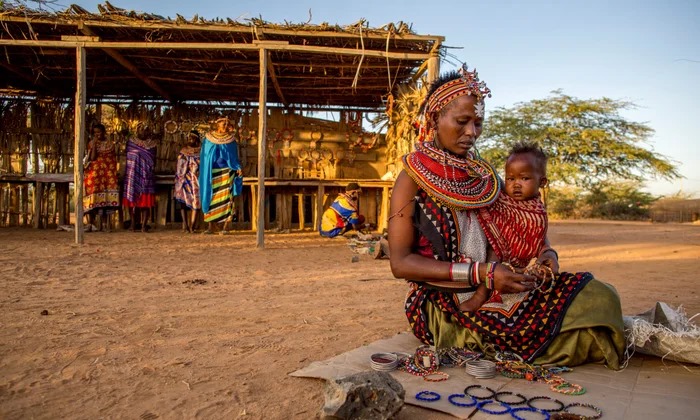
In the Limpopo province of South Africa, the Balobedu people hold a centuries-old belief in the power of rainmakers. At the center of their tradition is the Rain Queen, Modjadji, a mystical figure whose lineage dates back to the 16th century. Unlike most African monarchs, the Rain Queen does not rule through war or political alliances. Her power comes from the skies. She is believed to possess the ability to summon rain.
The title of Modjadji is passed down through a matrilineal system, meaning only women can inherit it. From a young age, the chosen successor is trained in secret rituals and herbal knowledge, preparing her for a life of spiritual isolation. She is surrounded by female attendants and advisors who assist her in performing sacred rites. Despite this seclusion, her influence stretches far beyond her royal compound.
The rainmaking ceremony of the Balobedu people is an elaborate and highly secretive process. Though outsiders have never fully witnessed it, oral narratives provide insight into its key elements. The ritual typically takes place during the dry season when the land is parched, and crops begin to wither.
The first step in the ceremony involves gathering sacred herbs known only to the Rain Queen and her closest attendants. These plants are believed to hold spiritual significance and must be picked at specific times of the day.
Once the preparation is complete, the queen enters a sacred enclosure, a place hidden from the public eye. There, she sits in meditation, invoking the spirits of her ancestors. The Balobedu believe that their forebears act as intermediaries between the living and the divine forces of nature.
As the queen performs her invocations, ritual dancers and drummers gather outside the royal compound. The drumming is said to mimic the sound of thunder, while the dancers move in patterns that symbolize flowing water.
In some instances, sacrificial offerings are made. Traditionally, a black bull or goat may be offered to the spirits, its blood symbolizing a renewal of life.
After the ceremonies, the community waits in anticipation. Sometimes, rain falls almost immediately. Other times, it takes days or even weeks. Regardless of the outcome, the Rain Queen’s role remains important, as she is seen as the bridge between the people and the forces of nature.
Though science now explains rain through meteorology, the tradition of the Rain Queen continues. Even in the 21st century, farmers in Limpopo still visit Modjadji’s royal compound to offer gifts in hopes of abundant rainfall. While South Africa has seen significant cultural shifts, the Balobedu people remain steadfast in preserving their sacred traditions.